Each business also has specific information it needs to track. A manufacturing business would need to track Raw Materials Inventory. A merchandising business would need to track Merchandise Inventory. Each business has its own group of accounts, called a Chart of Accounts. The accounts in the Chart of the Accounts are the accounts we use to categorize transactions.

To analyze accounting transactions follow these steps:
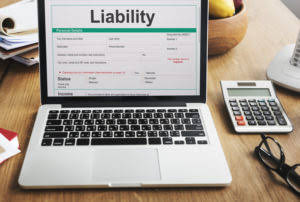
Both manual and computerized accounting systems utilized source documents. E-commerce systems have some additional source documents related to online transactions. Source documents help to establish an audit trail, which is a trail of evidence documenting the history of a specific transaction starting from its inception/source document and showing all the steps it went through until its final disposition. The trail of source documents and other records (the audit trail) makes it easier to investigate errors or questions by customers, vendors, employees, and others. For example, when a customer places an order by phone, by mail, or online, https://www.bookstime.com/ the sales order becomes the source document.
Processing Data
Fiat Chrysler Automobiles (FCA) is headquartered in the United Kingdom, and it designs its accounting information system to produce financials under International Financial Reporting Standards (IFRS). On the surface, it looks as though each company will create an information system based on the accounting rules in its own home country. Today, companies take advantage of the ability to borrow money across borders. The lenders often require the financial statements of the borrower to be presented using the accounting rules required by the lender’s country. For example, if GE wanted to borrow money from the Royal an accounting device used to analyze transactions Bank of Scotland, it would likely have to present its financial statements based on IFRS rules.
- Source documents help to establish an audit trail, which is a trail of evidence documenting the history of a specific transaction starting from its inception/source document and showing all the steps it went through until its final disposition.
- This means we are increasing Accounts Receivable by $30,800.
- Similar transactions are used to show how to track changes in the Accounting Equation using first T-Accounts and then journal entries.
- Most businesses have some form of both noncomputerized and computerized systems.
- Note the terms (agreements about payments) are listed at the top and how the company calculates those outcomes at the bottom.
( . Application of rules of debit and credit:
- The examples of accounting transactions we are using are very similar to what you’ll find in your accounting textbook, homework, and quizzes.
- An ERP system integrates all of the company’s computerized systems including accounting systems and nonaccounting systems.
- Accounting textbooks take three different approaches to teaching students how to analyze transactions.
- Figure 7.3 is a source document—an invoice (bill) from Symmetry Mold Design for mold design services.
- This activity will help you learn the vocabulary necessary to understand accounts, how a T account is set up, as well, as analyze how each account is affected from various transactions.
- We’ll use the same transactions for each of the methods.
Most https://correayalcalde.cl/bookkeeping/understanding-management-fees-definition-average/ businesses have some form of both noncomputerized and computerized systems. QuickBooks is an example of a relatively inexpensive accounting software application that is popular with small and medium-sized businesses. The accounting device used to analyze transactions is called a T account. The T account will help you record separate transactions for each account as either a debit or a credit. This activity will help you learn the vocabulary necessary to understand accounts, how a T account is set up, as well, as analyze how each account is affected from various transactions.
- A subsidiary is a business over which the parent company has decision-making control, usually indicated by an ownership interest of more than 50 percent.
- Before we start to analyze transactions for a business, we need to know what the accounts are that a business is tracking.
- You then fill out a document ordering a size medium sweatshirt in blue.
- The account titles so obtained must be in line with the account titles listed in the organization’s chart of accounts (COA) and used in the general ledger.
- At the end of the month, we need to determine how much we actually used for office supplies during that time.
- Nevertheless, cloud services are increasingly popular.
Storing Data
- This tear-off portion is a turn-around document and helps ensure that the payment is applied to the correct customer account and invoice.
- As you can see from Figure 7.6, stored data comes from and/or flows through the three main functions of an AIS (input, processes, and output) with the end result being the use of the data in forms needed for decision-making, such as financial statements.
- The trail of documents and entries in journals and ledgers and their electronic equivalent generated by this transaction provides evidence of all the steps that took place along the way.
- The sales process accesses customers, accounts receivable, and inventory data and updates the appropriate files.
- Most POS systems include a scanner, a computer screen, or a tablet with a touch screen.
The accounts being impacted are Cash (it’s decreasing) and Salaries Expense (it’s increasing). When you reach the point of doing these transactions as Journal Entries, rather than as a spreadsheet, this transaction would be done as a “compound journal entry.” Rather than having two parts to the transaction, this one has three parts. Three accounts are being impacted by this transaction. When a transaction says “billed”, it means you are creating an invoice to send to your customer. This means we are increasing Accounts Receivable by $30,800.